Lorem ipsum dolor sit amet, consectetur adipiscing elit.
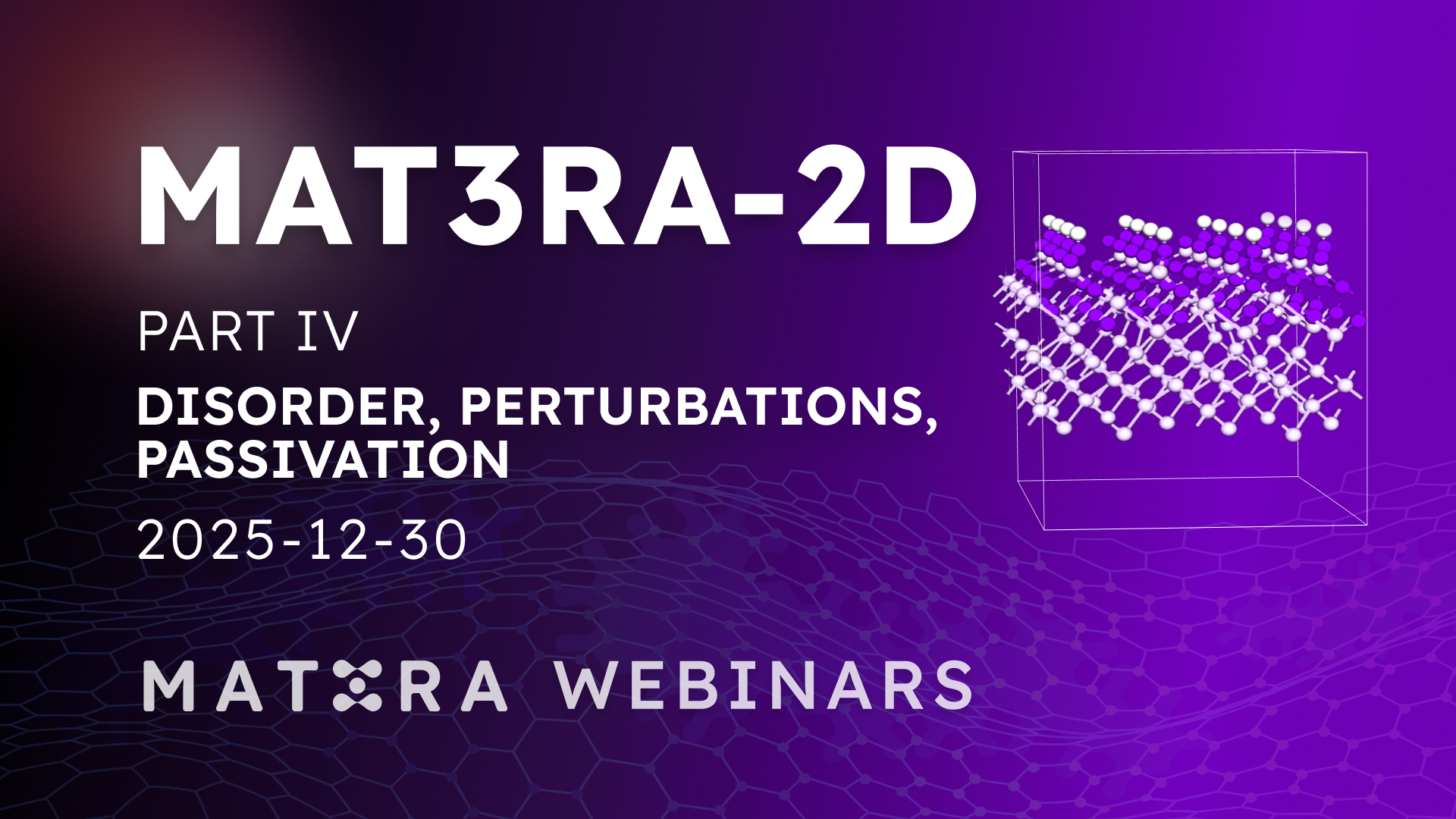
This (open to all) webinar will focus on creating and exploring complex 2D material structures using the `mat3ra-made` Python package. Building on previous sessions, this part demonstrates practical workflows in Jupyter Notebooks to design and analyze systems with disorder, perturbations, and passivation. The session is aimed at materials scientists and engineers of all levels and will include a live demonstration followed by Q&A.
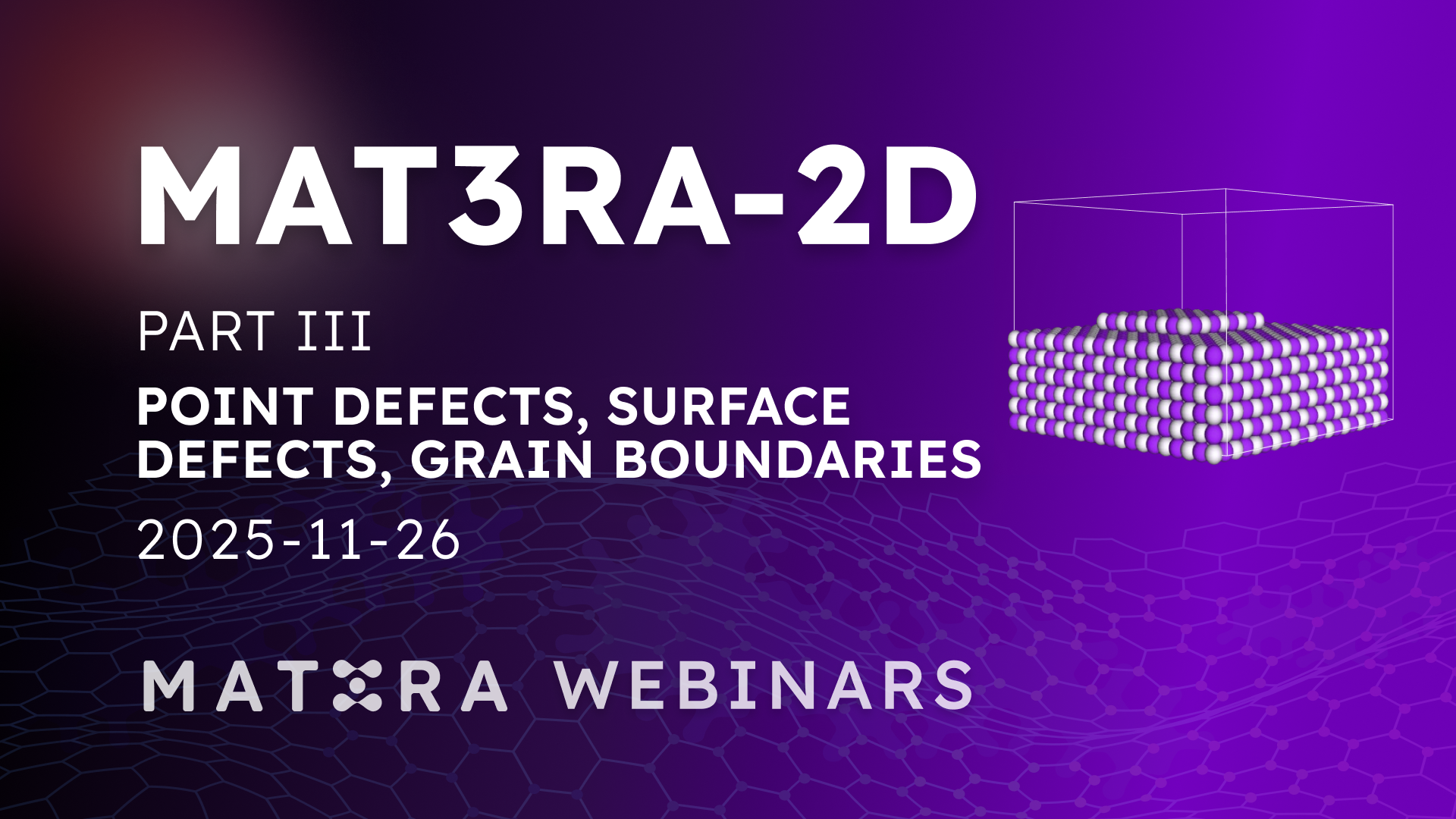
This (open to all) webinar will focus on the creation of more complex structures using the `mat3ra-made` Python package. Building on Parts I and II, we will demonstrate hands-on workflows in Jupyter Notebooks to design and explore point defects, surface defects, and grain boundaries. The session is targeted at materials scientists and engineers of all levels and will include a real-time demonstration with ample time for Q&A.
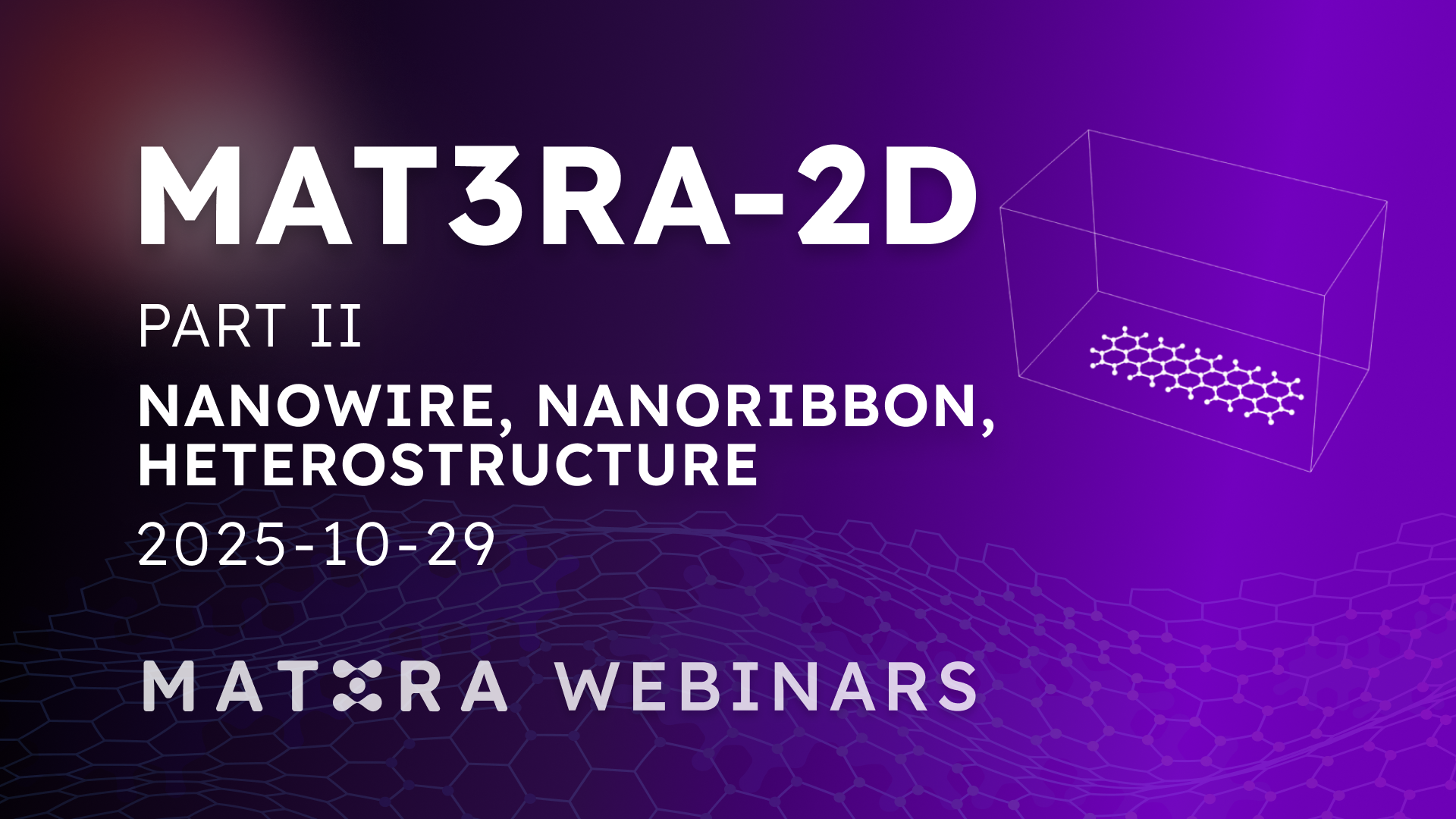
This (open to all) webinar will focus on creating more complex 2D-derived nanostructures using the mat3ra-made package. We will demonstrate hands-on workflows in Jupyter Notebooks to design nanowires, nanoribbons, and heterostructures. The session is targeted at materials scientists and engineers of all levels and will include a real-time demonstration with ample time for Q&A.
This (open to all) webinar will focus on introducing the `mat3ra-made` Python package for the design of real-world materials. We will demonstrate usage with Jupyter Notebooks and the main capabilities. The webinar is targeted at materials scientists at any skill level, will focus on hands-on real-time demonstration, and will include ample time for questions.