
Release 2026.5.28 introduces multiple new features. We highlight (1) a new step-by-step tutorial on using Machine-Learned Forcefields in the platform to perform structural relaxation, phonon calculations, and similar, highlighting Microsoft’s Mattersim as a specific implementation and NVIDIA GPUs as an accelerator; (2) a new Jupyter notebook demonstrating how to use MACE universal forcefield to do structural relaxation inside a web browser with no additional infrastructure needed, and (3) New jupyter notebooks demonstrating the calculations of surface energy and the equation of state.

Release 2026.5.28 introduces multiple new features. We highlight (1) a new step-by-step tutorial on using Machine-Learned Forcefields in the platform to perform structural relaxation, phonon calculations, and similar, highlighting Microsoft’s Mattersim as a specific implementation and NVIDIA GPUs as an accelerator; (2) a new Jupyter notebook demonstrating how to use MACE universal forcefield to do structural relaxation inside a web browser with no additional infrastructure needed, and (3) New jupyter notebooks demonstrating the calculations of surface energy and the equation of state.
mat3ra-notebooks-utils Per the video tutorial below:
Also available at https://docs.mat3ra.com/tutorials/ml/run-mlff-python-workflows-mattersim/.
New notebook highlighting the use of MLFF (MACE)
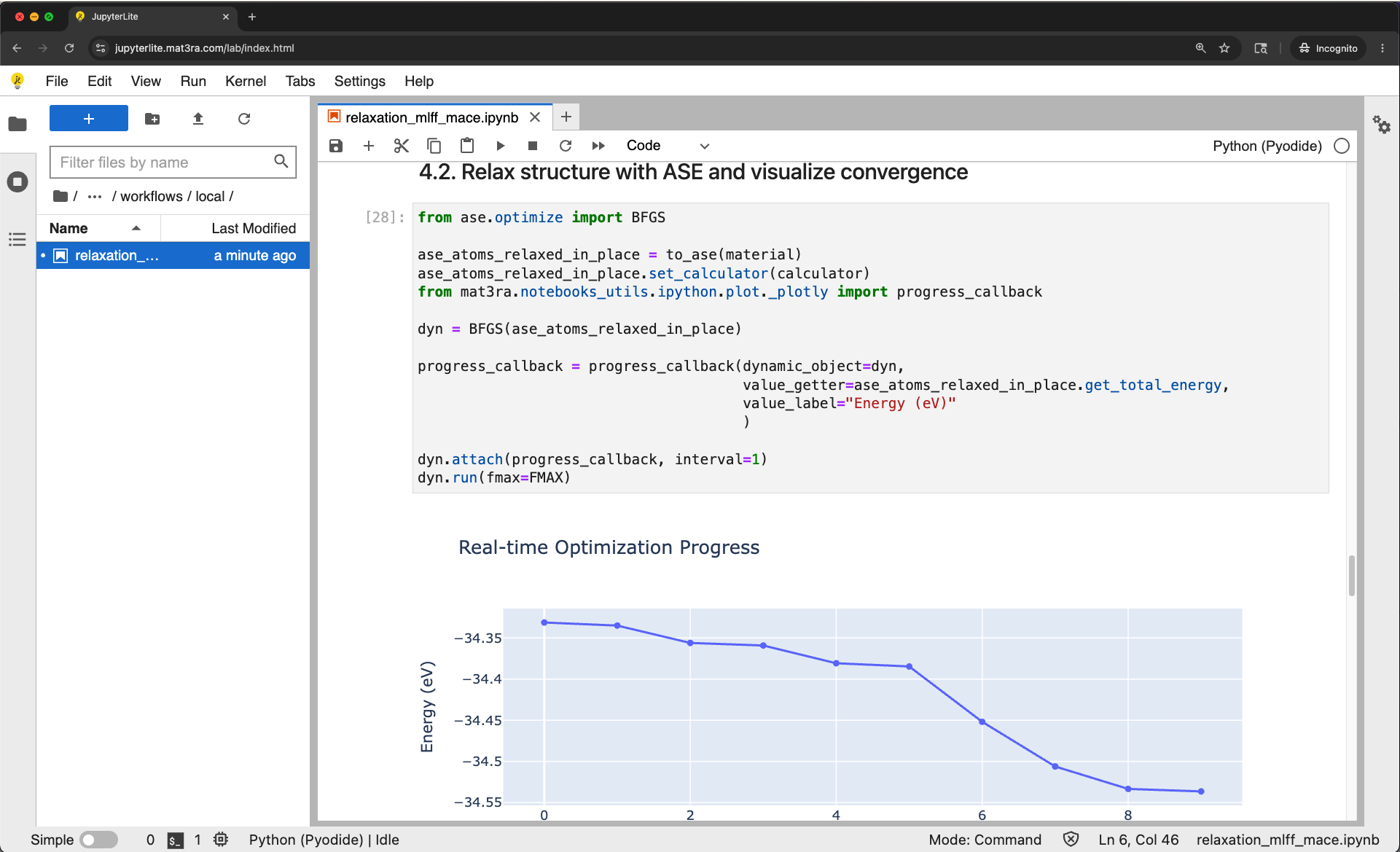
We continue populating the api-example notebooks with example calculations.
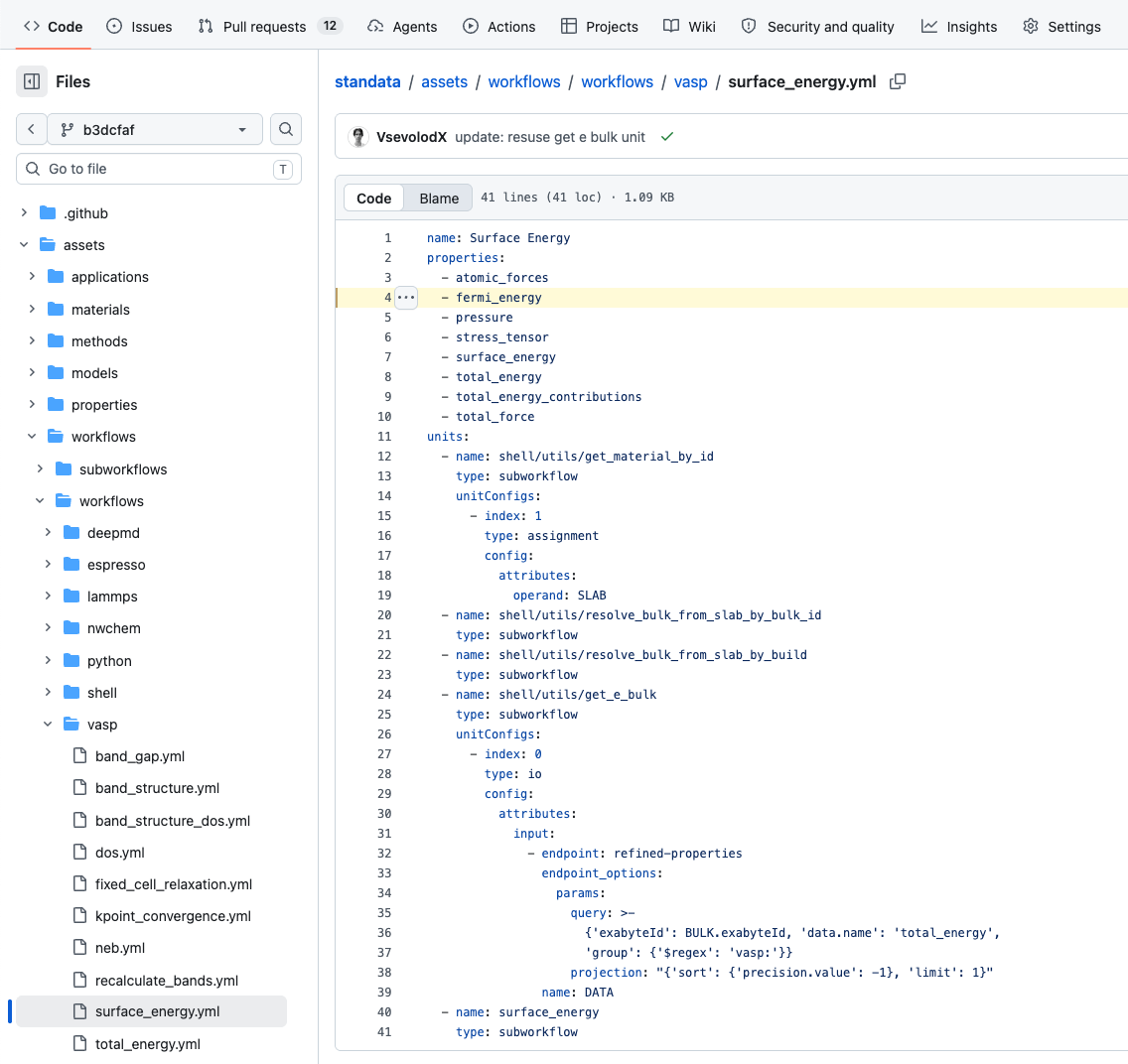
Structural relaxation with MLFF and DFT.
Try the new functionality online at https://platform.mat3ra.com/

Exabyte Inc.
1212 Broadway Plaza, Ste #2100 Walnut Creek, CA 94596
+1 (510) 473 7770
info@mat3ra.com
Mat3ra Japan K.K.
Otemachi Building 6F Inspired Lab,
1-6-1, Otemachi, Chiyoda-ku, Tokyo 100-0004 Japan


