
Mat3ra visited Tokyo to meet with ENEOS and Matlantis, and with University of Tokyo faculty — Professor Teruyasu Mizoguchi, Professor Junichiro Shiomi, and Associate Professor Shigeru Kobayashi — to discuss closed-loop, AI-driven approaches to materials science.

In mid-September 2026, Mat3ra visited Tokyo for a series of meetings spanning industry and academia, bringing together conversations on AI-driven, closed-loop approaches to materials research — from neural network interatomic potentials to synchrotron spectroscopy and thin-film synthesis.
The visit began at the University of Tokyo's Hongo campus, with a meeting hosted by Professor Junichiro Shiomi of the Department of Mechanical Engineering. Professor Shiomi's Thermal Energy Engineering Lab (Shiomi Lee Asano Lab) works at the intersection of nanoscale thermal science and materials informatics, combining machine-learned interatomic potentials, automated first-principles phonon workflows, and large-scale thermal conductivity databases such as Phonix — alongside ongoing efforts to integrate robotics and machine learning for autonomous materials experiments.
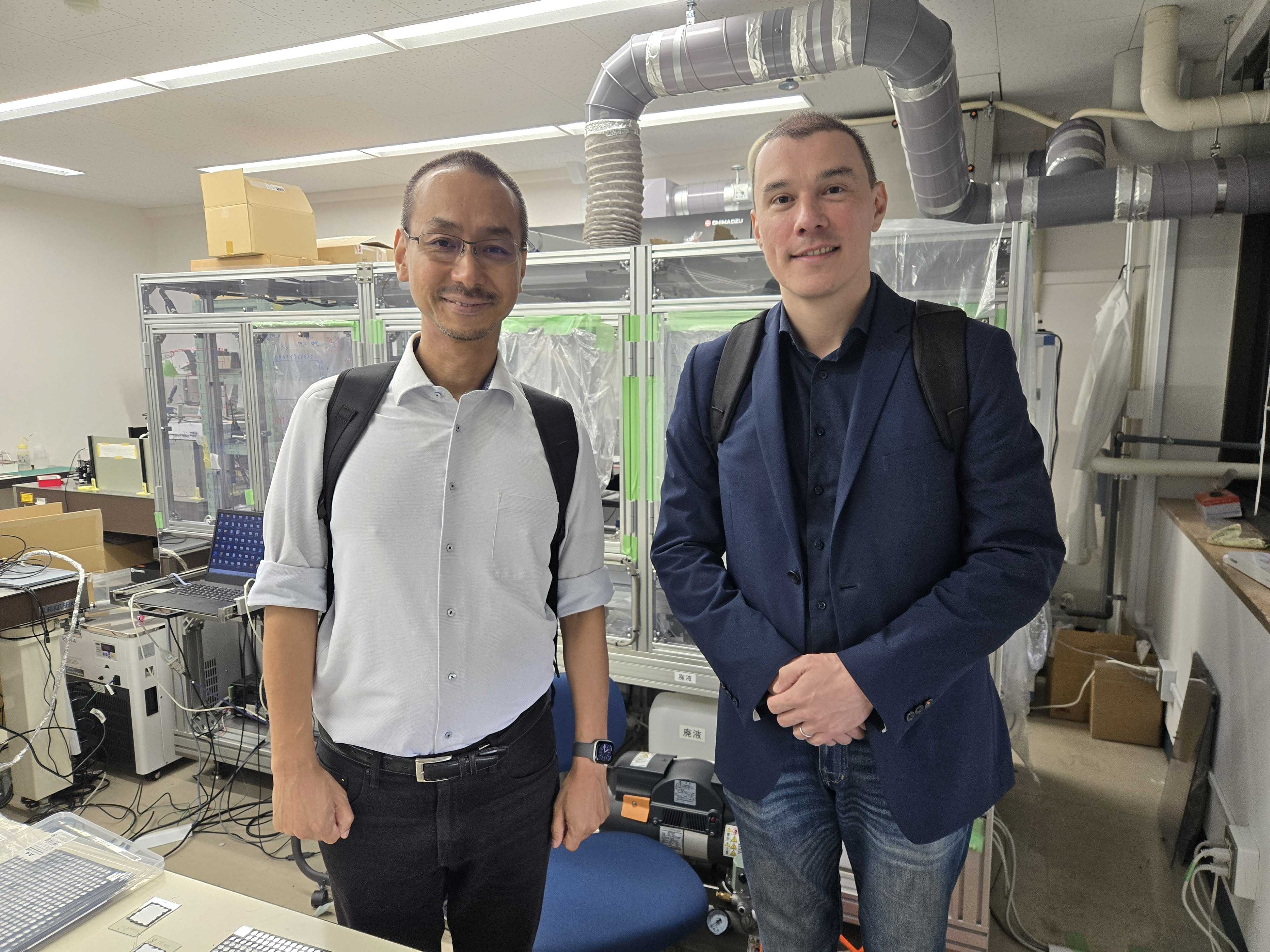
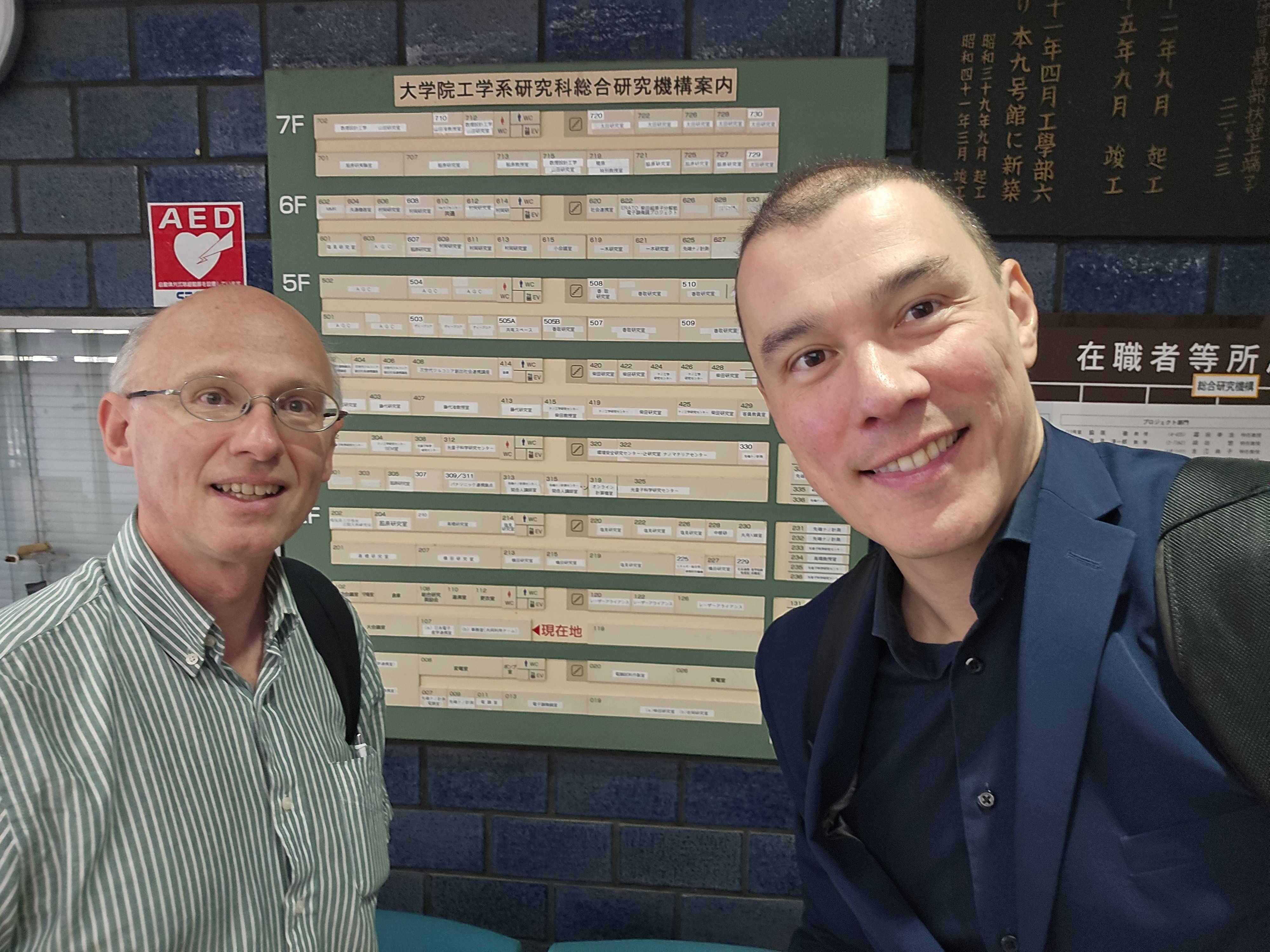
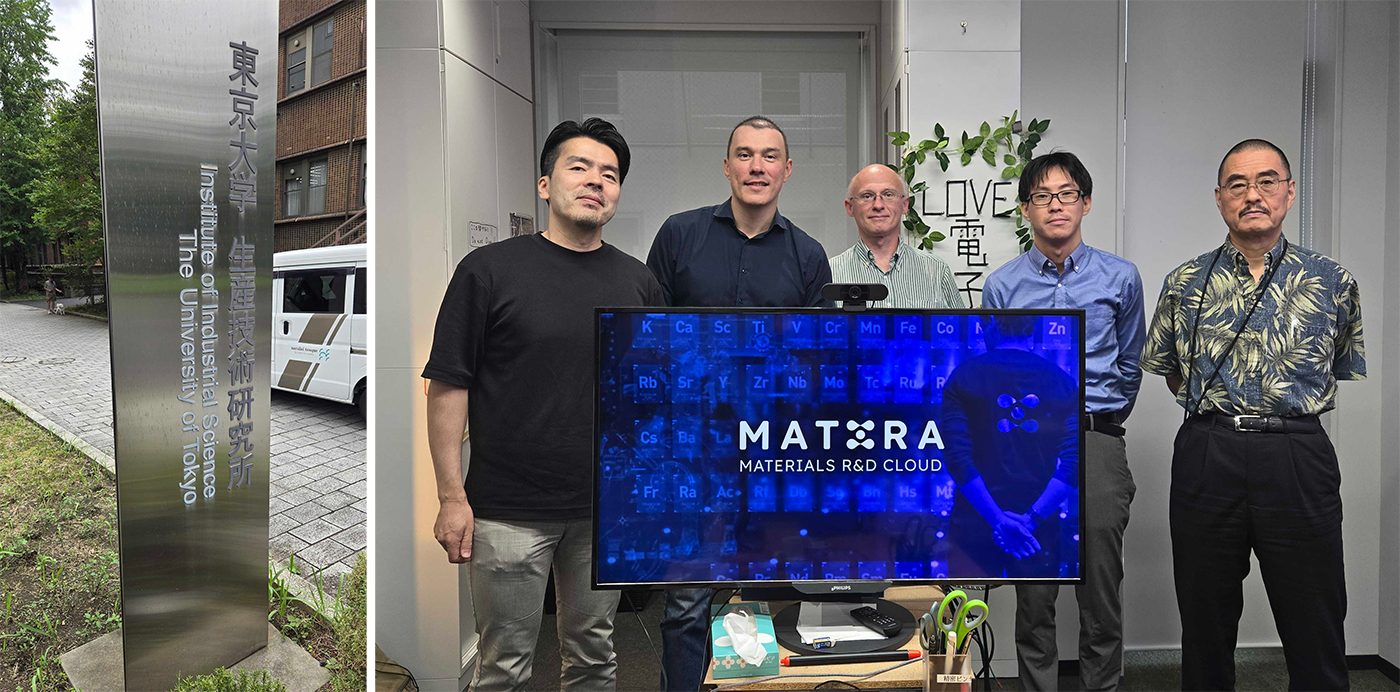
Mat3ra then traveled across town to the University of Tokyo's Institute of Industrial Science in Komaba, for a meeting with Professor Teruyasu Mizoguchi and his Nano-Materials Design Laboratory. The lab applies machine learning to materials characterization — decoding spectroscopy data such as EELS and XAFS, and using Bayesian optimization to analyze lattice defects, interfaces, and surfaces — closing the loop between predicted atomic structures and experimental measurements.
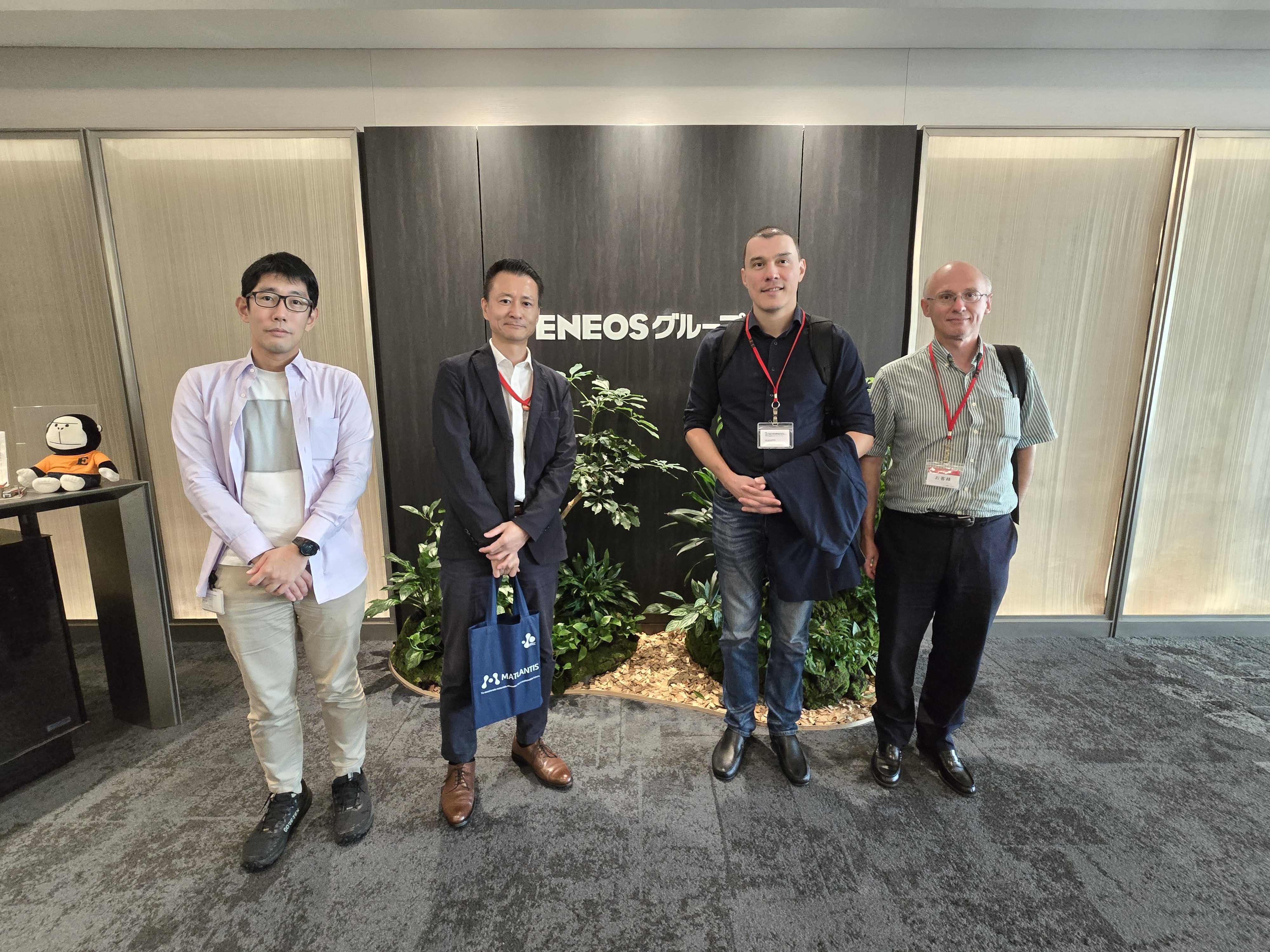
The day also included a visit to ENEOS's Tokyo headquarters. ENEOS, together with Preferred Networks, co-developed Matlantis, a materials simulation platform built on PreFerred Potential (PFP) — a universal neural network interatomic potential spanning dozens of elements. The visit offered a chance to compare notes on AI-driven atomistic simulation at industrial scale, a space closely adjacent to Mat3ra's own work on computational materials platforms.
The following day, Mat3ra met with Associate Professor Shigeru Kobayashi of the University of Tokyo's Graduate School of Engineering, affiliated with the Center for Spintronics Research Network. Associate Professor Kobayashi's group studies the electronic structure of functional and spintronic materials using synchrotron radiation techniques — photoemission and angle-resolved photoemission spectroscopy, X-ray absorption spectroscopy, XMCD, and RIXS — paired with molecular beam epitaxy for thin-film growth, forming an experimental synthesis-and-characterization loop that complements computational materials design.
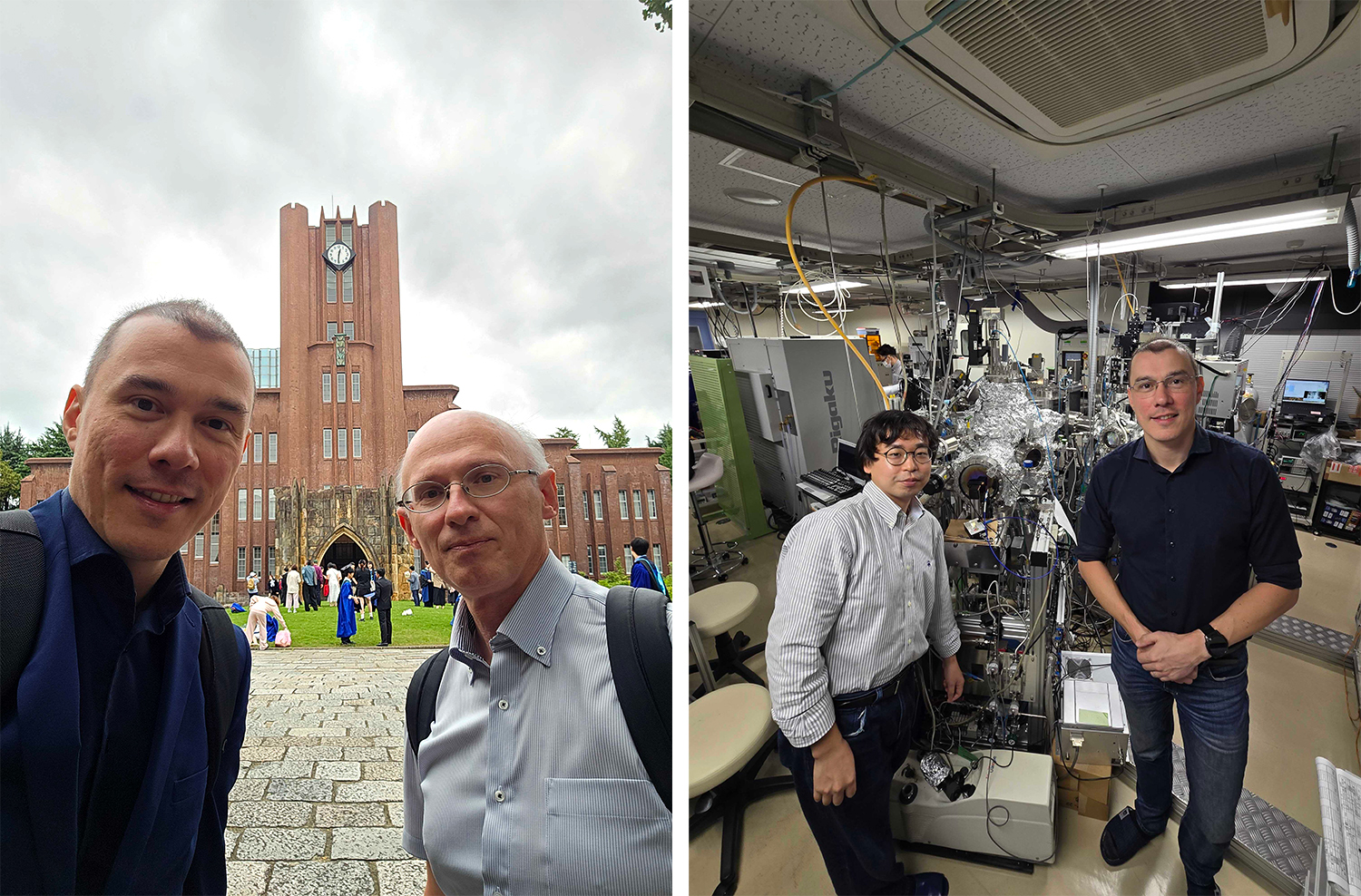
Across two days, these conversations connected Mat3ra with both the industrial and academic sides of Japan's AI-driven materials science ecosystem — from neural network potentials deployed at scale to the machine learning, spectroscopy, and thin-film techniques driving materials discovery in the lab. Together, they point toward the same goal Mat3ra is built around: closing the loop between computation and experiment in materials R&D.

Exabyte Inc.
1212 Broadway Plaza, Ste #2100 Walnut Creek, CA 94596
+1 (510) 473 7770
info@mat3ra.com
Mat3ra Japan K.K.
Otemachi Building 6F Inspired Lab,
1-6-1, Otemachi, Chiyoda-ku, Tokyo 100-0004 Japan


