
Release 2026.6.25 introduces multiple new capabilities. We highlight (1) a new step-by-step tutorial demonstrating how third-party developers can add support to their software applications to the Mat3ra platform; (2) a new Jupyter notebook demonstrating how to use multiple universal forcefields - MACE, Microsoft Mattersim, Nequip, Facebook UMA, Chgnet, to do structural relaxation inside a web browser with no additional infrastructure needed, and (3) New jupyter notebooks and a platform Workflow demonstrating the calculations of formation energy for compounds.

Release 2026.6.25 introduces multiple new capabilities. We highlight (1) a new step-by-step tutorial demonstrating how third-party developers can add support to their software applications to the Mat3ra platform; (2) a new Jupyter notebook demonstrating how to use multiple universal forcefields - MACE, Microsoft Mattersim, Nequip, Facebook UMA, Chgnet, to do structural relaxation inside a web browser with no additional infrastructure needed, and (3) New jupyter notebooks and a platform Workflow demonstrating the calculations of formation energy for compounds.
Per the tutorial:
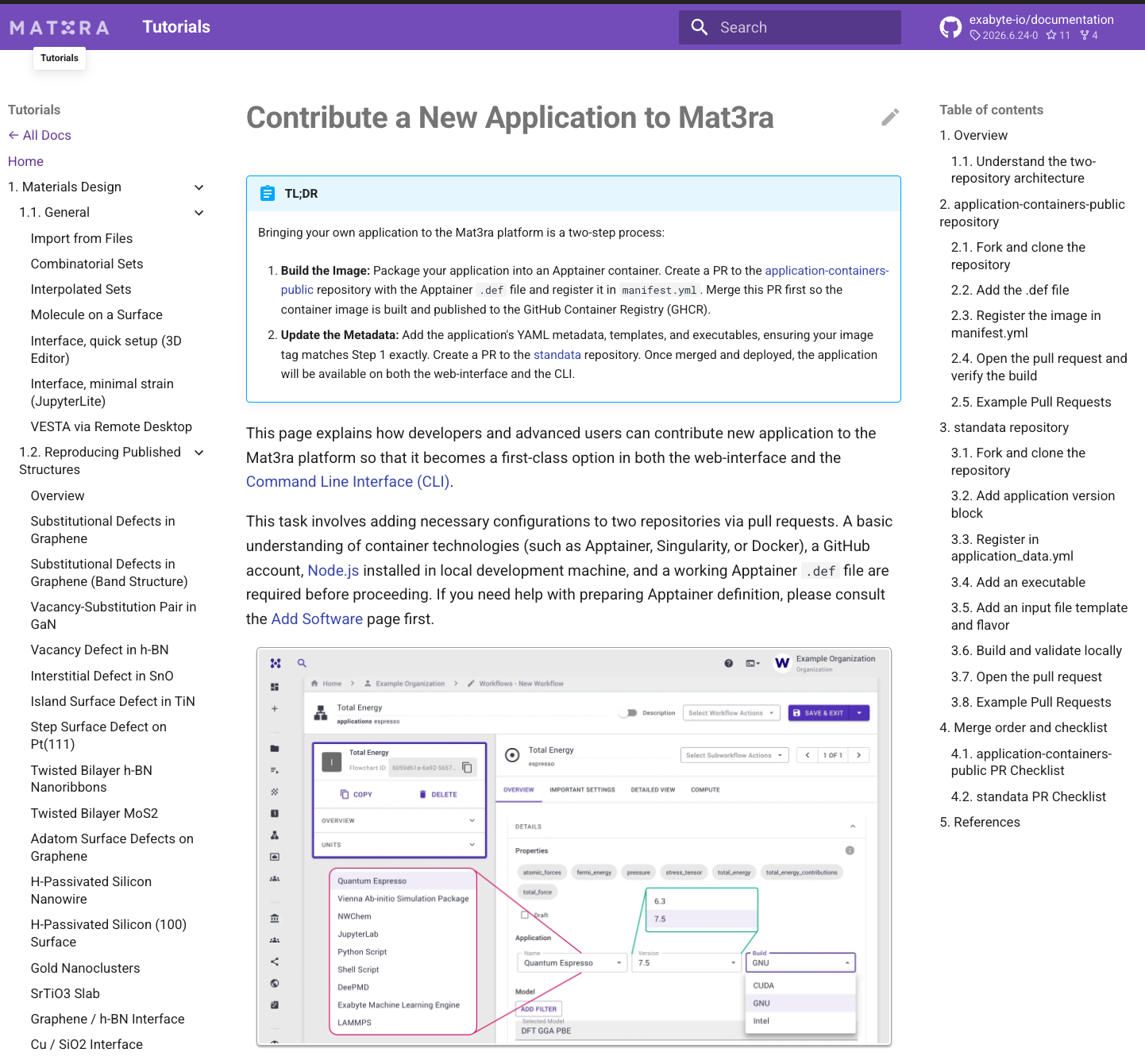
Available at https://docs.mat3ra.com/guide/tutorials/contribute-new-application/.
MACE, Nequip, Mattersim, UMA, ChgNet
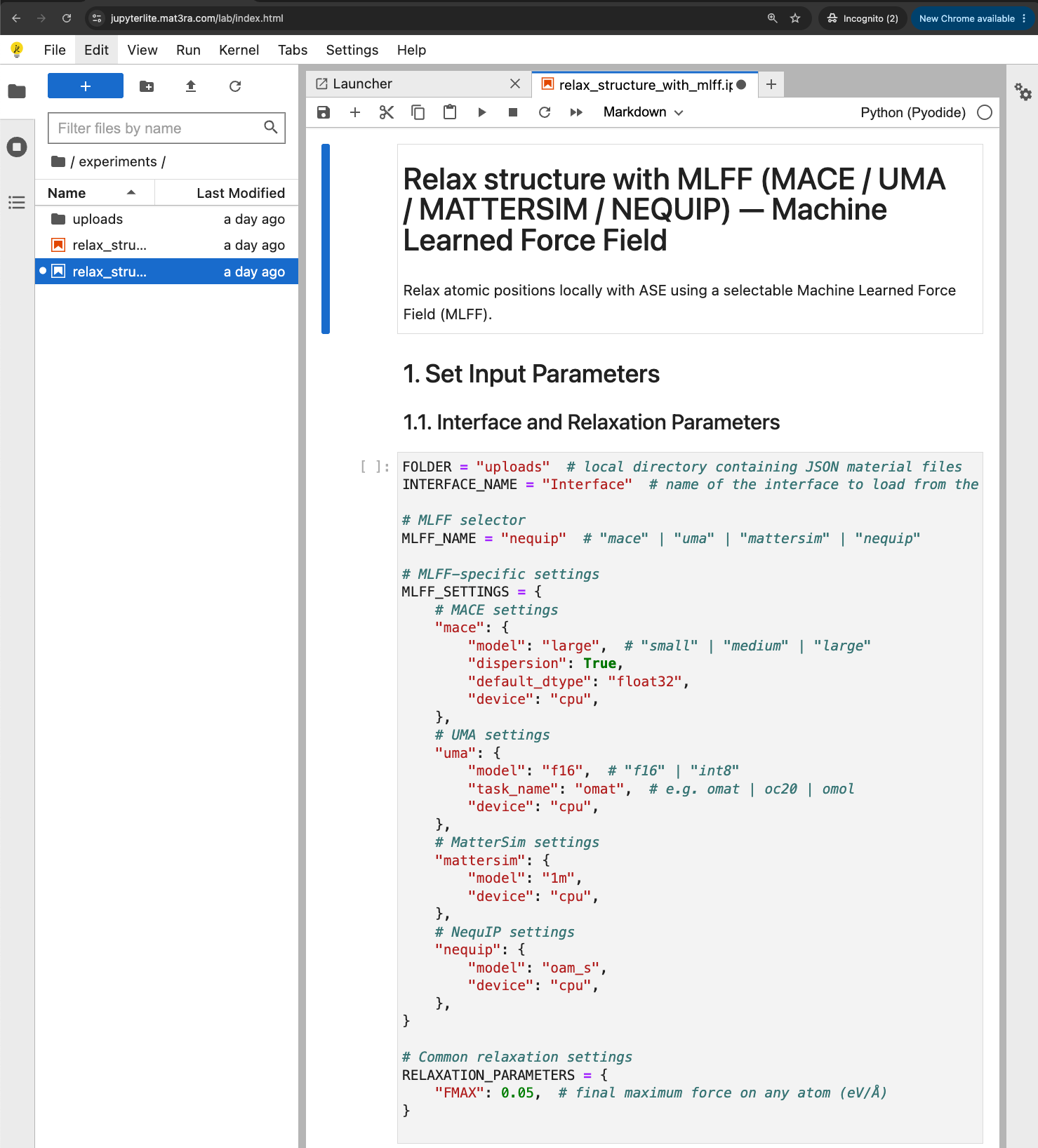
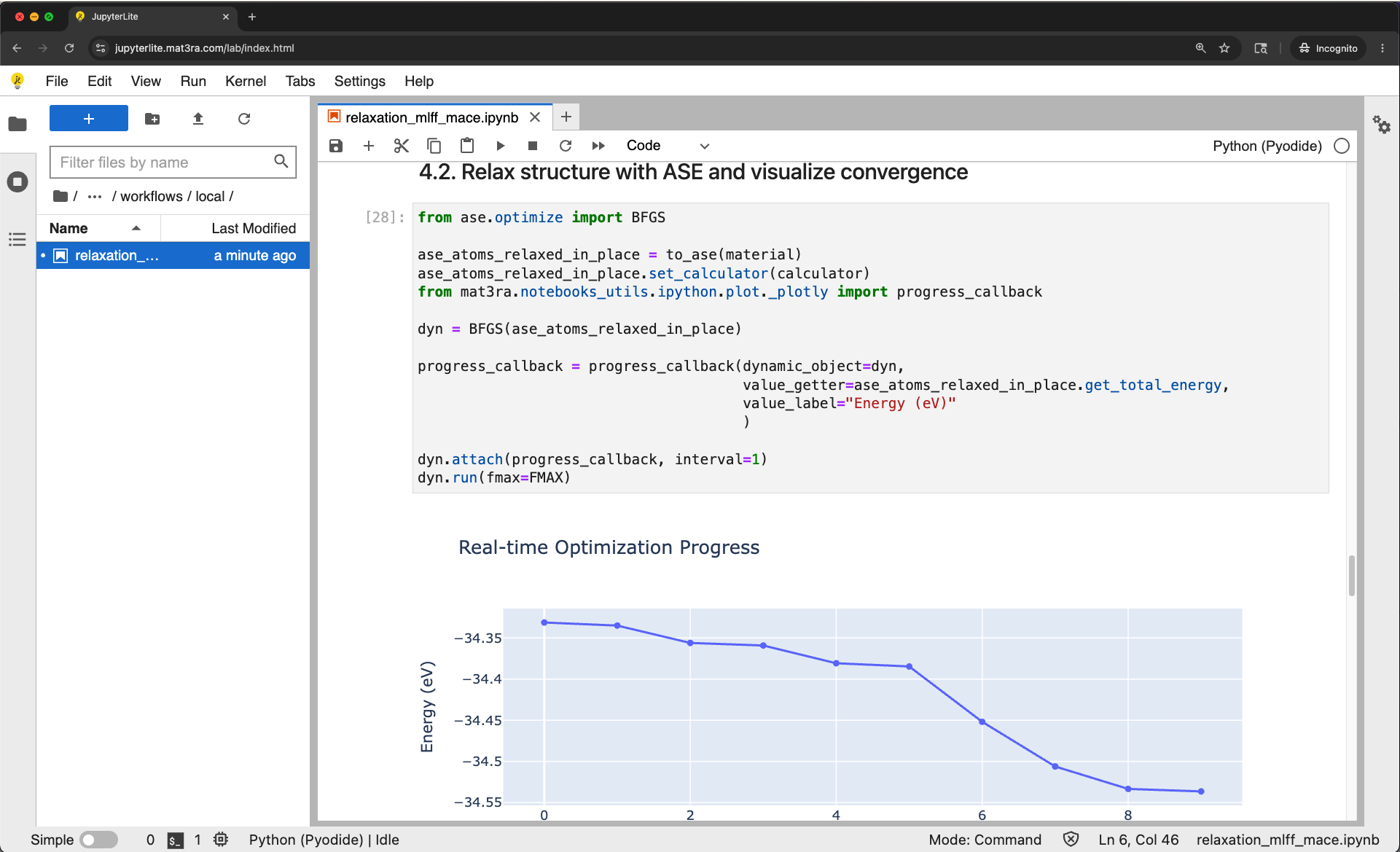
We continue populating the api-example notebooks with example calculations per the visual below:
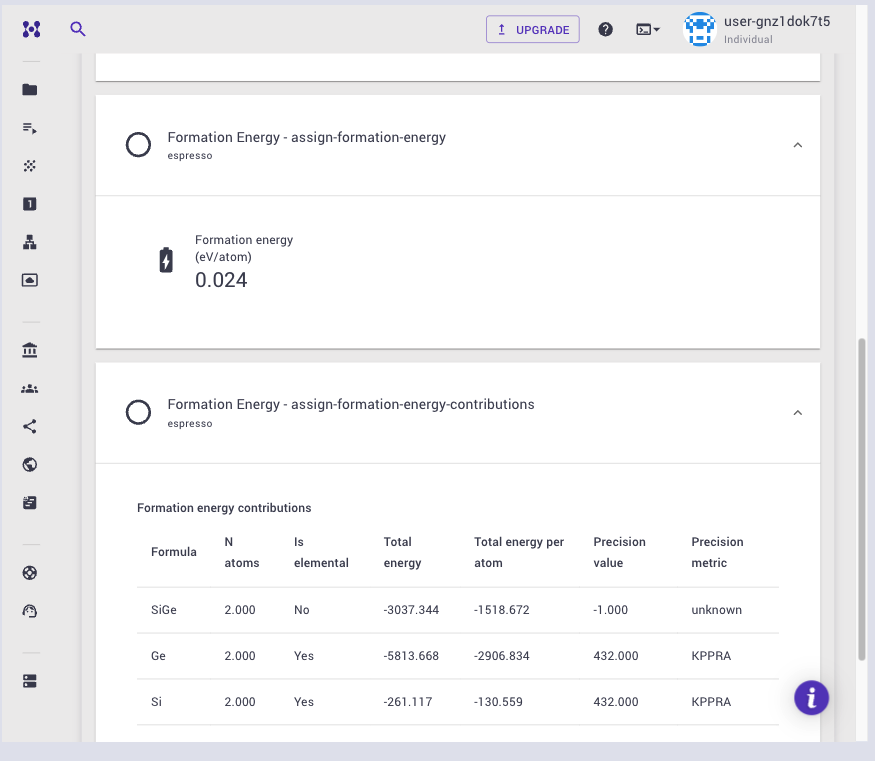
Band Structure, Band Gap, Density of States, including Hybrid Functionals, Magnetism, DFT+U:
Try the new functionality online at https://platform.mat3ra.com/

1212 ブロードウェイプラザ、セット #2100
1212 Broadway Plaza, Ste #2100 Walnut Creek, CA 94596
+1 (510) 473 7770
info@mat3ra.com
Mat3ra Japan K.K.
Otemachi Building 6F Inspired Lab,
1-6-1, Otemachi, Chiyoda-ku, Tokyo 100-0004 Japan


